
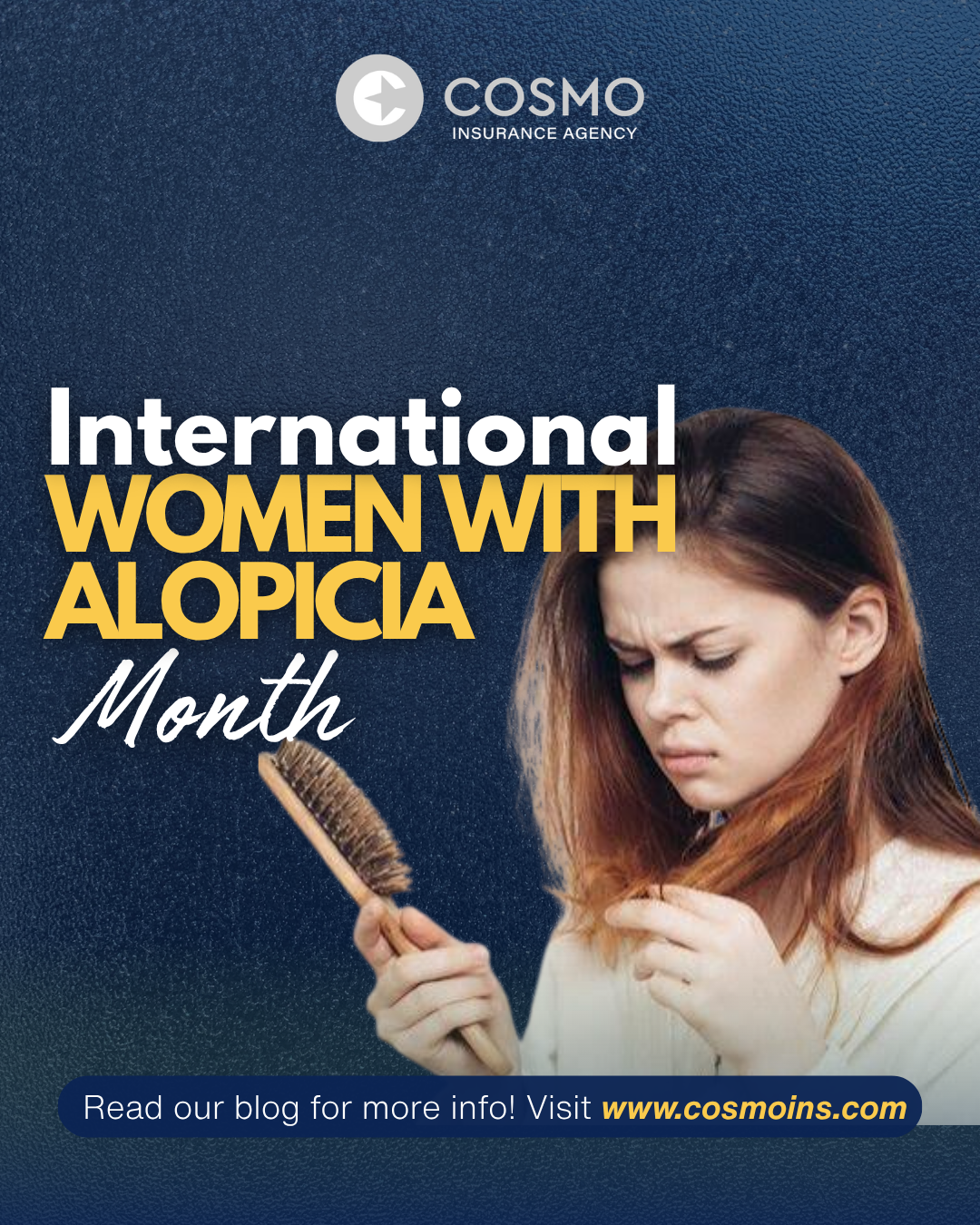
Every July, International Women with Alopecia Month shines a spotlight on the millions of women worldwide living with alopecia. While hair loss is often associated with men, alopecia affects women of all ages and backgrounds, impacting not only their appearance but also their emotional well-being and self-confidence.
This awareness month encourages education, compassion, and support while reminding women that they are not alone. It also highlights the importance of early diagnosis, access to healthcare, and comprehensive health coverage that can help individuals manage the condition and its effects.
What Is Alopecia?
Alopecia is a medical condition that causes partial or complete hair loss. It can affect the scalp, eyebrows, eyelashes, or other areas of the body. There are several types of alopecia, including:
- Alopecia Areata – An autoimmune condition that causes patchy hair loss.
- Androgenetic Alopecia – Commonly known as female pattern hair loss, often linked to genetics and hormones.
- Traction Alopecia – Hair loss caused by repeated tension from certain hairstyles.
- Scarring Alopecia – A group of rare conditions that permanently damage hair follicles.
Hair loss can develop gradually or suddenly, depending on the underlying cause.
Common Causes of Alopecia
Alopecia may result from a variety of factors, including:
- Autoimmune disorders
- Genetics
- Hormonal changes
- Thyroid conditions
- Stress
- Nutritional deficiencies
- Certain medications or medical treatments
- Hairstyles that place excessive tension on the hair
Because many different conditions can contribute to hair loss, it’s important to consult a healthcare provider for a proper evaluation.
More Than Hair Loss: The Emotional Impact
For many women, hair is closely tied to identity and self-expression. Experiencing hair loss can lead to:
- Lower self-esteem
- Anxiety or depression
- Social withdrawal
- Increased emotional stress
- Reduced confidence in professional or personal settings
Recognizing the emotional effects of alopecia is just as important as addressing the physical symptoms. Support groups, counseling, and mental health resources can make a meaningful difference.
Diagnosis and Treatment Options
Although there is no universal cure for all forms of alopecia, many treatment options can help manage the condition depending on its cause.
A healthcare provider may recommend:
- Medical evaluations and blood work
- Prescription medications
- Topical treatments
- Corticosteroid injections
- Lifestyle and nutritional improvements
- Stress management techniques
- Wigs, hairpieces, or cosmetic solutions
Early diagnosis often provides more treatment options and may improve outcomes for some forms of hair loss.
The Importance of Health Insurance
Managing alopecia may involve visits to primary care physicians, dermatologists, specialists, laboratory testing, prescription medications, and ongoing follow-up appointments.
A comprehensive health insurance plan can help individuals access the healthcare services they need while reducing out-of-pocket costs for covered medical care. Although cosmetic treatments may not always be covered, insurance can often assist with medically necessary evaluations and treatments related to the underlying condition.
At Cosmo Insurance Agency, we believe that access to quality healthcare empowers individuals to take charge of their health with confidence. Understanding your health benefits can make it easier to seek timely medical attention and explore available treatment options.
How You Can Support International Women with Alopecia Month
Everyone can help create a more supportive and inclusive community by:
- Learning about alopecia and sharing accurate information.
- Encouraging friends or loved ones experiencing hair loss to seek medical advice.
- Promoting kindness and acceptance.
- Supporting organizations dedicated to alopecia research and advocacy.
- Celebrating the strength and resilience of women living with alopecia.
Final Thoughts
International Women with Alopecia Month is a reminder that beauty extends far beyond appearance. Every woman’s journey is unique, and compassion, awareness, and access to quality healthcare can make a lasting difference.
This July, take time to learn more about alopecia, support those affected, and encourage conversations that reduce stigma. Whether you’re living with alopecia or supporting someone who is, awareness is the first step toward understanding, confidence, and better health.
For more follow us on Instagram, Facebook, Twitter, & LinkedIn.
