
Employee satisfaction is influenced by much more than salary. Employees want to feel supported, valued, and confident that their workplace is helping them succeed both professionally and personally.
That is why modern organizations are taking a more connected approach to employee experience—bringing together Human Resources, technology, and employee benefits to create a workplace that is easier to navigate, more supportive, and more responsive to employee needs.
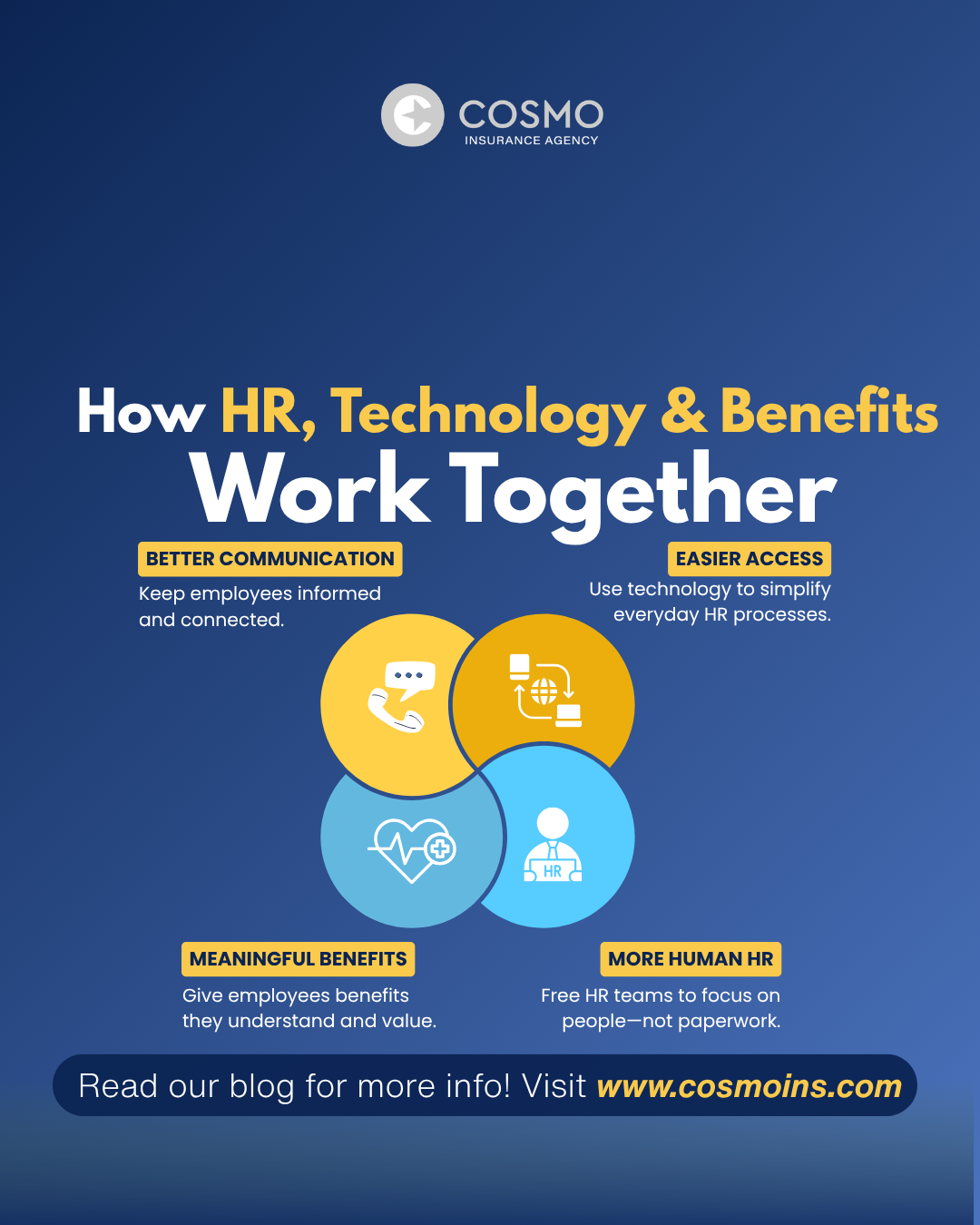
When these three areas work together, businesses can improve communication, simplify everyday processes, and provide benefits that employees actually understand and use.
HR: Building a Strong Employee Experience
Human Resources plays a central role in shaping how employees experience their workplace.
From onboarding and communication to professional development and workplace policies, HR helps establish the systems and culture that influence employee satisfaction.
Effective HR teams can help employees feel supported by:
- Creating clear communication channels
- Providing resources for workplace and personal needs
- Improving onboarding and training
- Encouraging employee feedback
- Supporting professional development
- Helping employees understand available benefits
However, HR teams can become overwhelmed when they have to manage every process manually. This is where technology can make a significant difference.
Technology: Making HR More Efficient
HR technology can simplify many of the administrative tasks that consume valuable time.
Modern HR platforms can help organizations manage employee information, payroll, onboarding, time tracking, benefits administration, and other essential processes in one more organized environment.
Technology can improve the employee experience by making information easier to access and processes easier to complete.
For example, employees may be able to:
- Access benefits information online
- Complete enrollment digitally
- Review important HR documents
- Update personal information
- Access payroll information
- Submit requests electronically
- Find workplace resources more quickly
For HR teams, these tools can reduce repetitive administrative work and create more time to focus on employees.
Benefits: Providing Support Beyond the Paycheck
Employee benefits are another major part of employee satisfaction.
Health insurance, dental and vision coverage, voluntary benefits, retirement options, wellness programs, and other offerings can provide employees with valuable support throughout different stages of their lives.
But simply offering benefits does not guarantee employees will appreciate them.
Employees need to understand what their benefits provide, how they work, and how to access them.
This is where HR and technology can work together to make benefits more accessible.
A well-organized benefits communication strategy can help employees understand their options during open enrollment and throughout the year. Digital tools can also make it easier for employees to review plan information and complete important tasks.
The Connection Between HR, Technology, and Benefits
The real opportunity comes when these three areas are connected instead of operating independently.
Think of the relationship this way:
HR provides the strategy and support.
Technology provides the tools and efficiency.
Benefits provide valuable resources and protection for employees.
Together, they can create a more seamless employee experience.
For example, an employee starting a new job may complete onboarding through an HR technology platform, receive information about available benefits, enroll electronically, and access important resources without having to navigate multiple disconnected processes.
That type of experience can reduce frustration and help employees feel more confident from the beginning.
Better Communication Can Lead to Better Engagement
One of the biggest advantages of connecting HR, technology, and benefits is improved communication.
Employees cannot take full advantage of resources they do not understand.
Organizations can use HR platforms, email communication, employee portals, meetings, educational materials, and other tools to provide benefits information in ways employees can easily understand.
Communication should not stop after open enrollment.
Employees may have questions about qualifying life events, coverage options, wellness resources, voluntary benefits, or other workplace programs throughout the year.
Consistent communication helps keep employees informed and reinforces the value of the benefits their employer provides.
Technology Can Help Personalize the Employee Experience
Today’s workforce includes employees with different needs, priorities, and expectations.
Technology can help organizations deliver information more efficiently while giving employees greater control over their own information and benefits.
Instead of relying entirely on paper forms or one-time meetings, organizations can provide employees with digital access to resources when they need them.
This can make benefits administration more convenient while also helping HR teams identify areas where employees may need additional education or support.
HR Can Focus More on People
When technology handles more routine administrative responsibilities, HR professionals can spend more time on the human side of their role.
That may include:
- Listening to employee concerns
- Supporting managers
- Developing workplace programs
- Strengthening company culture
- Improving employee engagement
- Identifying retention opportunities
- Helping employees navigate available resources
Technology should not replace the human element of HR. Instead, it can help HR professionals spend less time managing paperwork and more time supporting people.
Benefits Can Become a Strategic Advantage
Employee benefits are often viewed as a cost of doing business, but they can also play an important role in attracting and retaining talent.
A thoughtfully designed benefits program can demonstrate that an organization is invested in its employees.
When benefits are paired with effective HR support and accessible technology, employees may have a better understanding of the total value of their compensation package.
This can help employers communicate their commitment to employees while creating a more positive overall workplace experience.
Creating a More Connected Workplace
Improving employee satisfaction does not necessarily require one major change.
Sometimes, it comes from connecting the systems an organization already has.
When HR processes are supported by the right technology and employees have access to meaningful benefits, businesses can create a workplace where employees have easier access to information, resources, and support.
The goal is simple: make it easier for employees to get what they need while giving HR the tools to provide better support.
How Cosmo Insurance Can Help
At Cosmo Insurance Agency, we understand that employee benefits are about more than selecting an insurance plan. They are an important part of an organization’s overall employee experience and benefits strategy.
From health insurance and ancillary benefits to benefits education and enrollment support, having the right guidance can help employers build a benefits program that works for both the organization and its employees.
When HR, technology, and benefits are aligned, businesses can create a more efficient and supportive employee experience—helping employees feel informed, valued, and better equipped to make decisions about their benefits.
Looking to Strengthen Your Employee Benefits Strategy?
Whether you’re evaluating your current benefits program, preparing for open enrollment, or looking for ways to improve benefits communication, Cosmo Insurance Agency can help you explore your options.
Contact Cosmo Insurance Agency today to learn how the right benefits strategy can support a stronger employee experience.
For more follow us on Instagram, Facebook, Twitter, & LinkedIn.
