
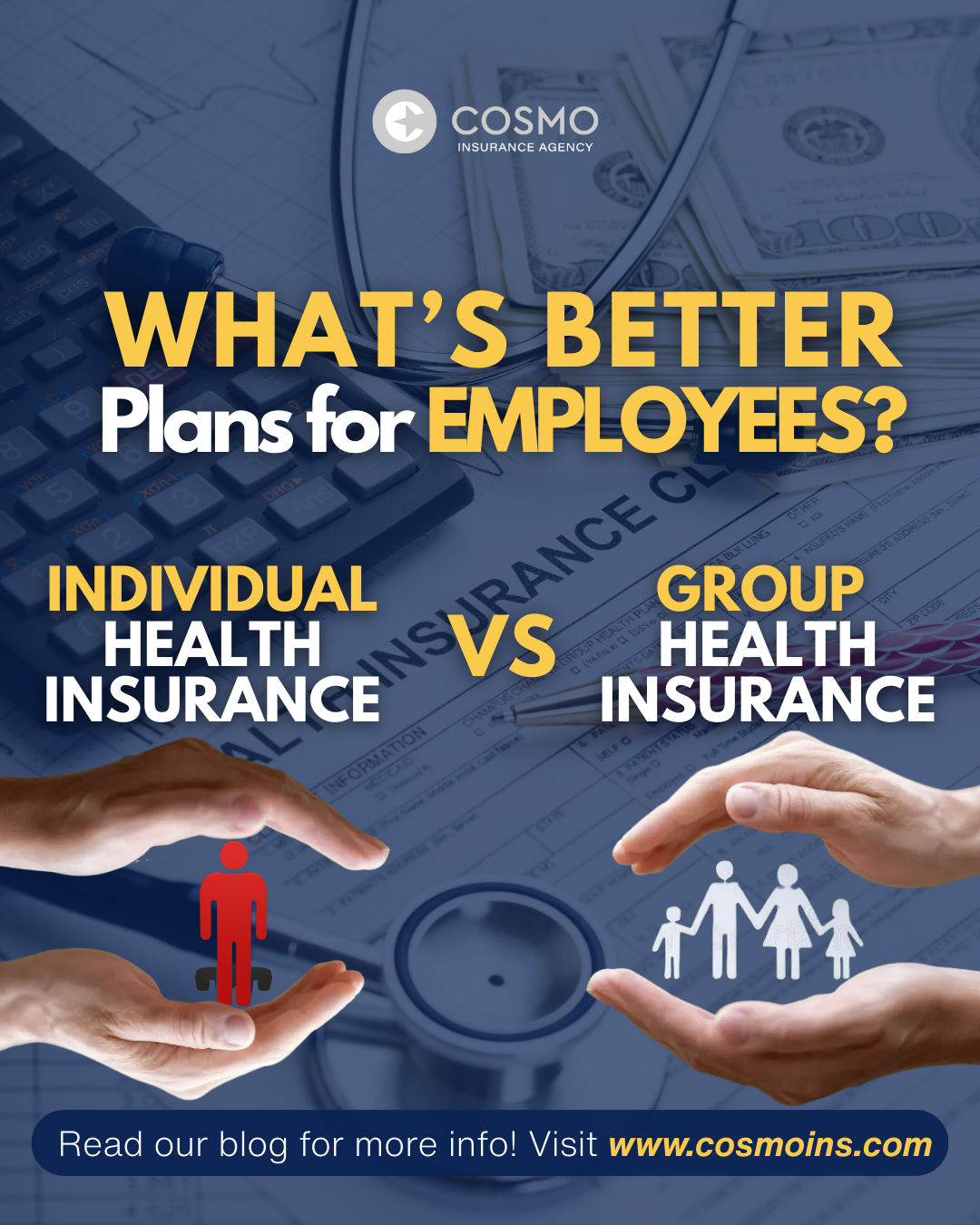
Choosing the right health insurance option is one of the most important decisions employees and employers can make. With rising healthcare costs and more plan options than ever, many people ask the same question: Is group health insurance better than individual health plans?
The answer depends on factors like cost, coverage needs, flexibility, and long-term value. Below, we break down the differences to help you decide what works best for your workforce.
What Is Group Health Insurance?
Group health insurance is coverage offered by an employer to eligible employees (and often their dependents). Because the risk is spread across a group, insurers typically offer lower premiums and broader coverage.
Key Benefits of Group Health Insurance
- Lower premiums: Employers often subsidize a portion of the cost.
- Comprehensive coverage: Includes preventive care, prescriptions, mental health services, and more.
- Guaranteed issue: Employees usually can’t be denied due to pre-existing conditions.
- Tax advantages: Employer contributions are typically tax-deductible, and employee premiums may be pre-tax.
- Employee retention: Health benefits remain one of the most valued workplace perks.
Potential Drawbacks
- Limited plan customization
- Coverage may end if employment ends
- Less flexibility in provider networks
What Are Individual Health Insurance Plans?
Individual plans are purchased directly by employees through the Health Insurance Marketplace or private insurers. These plans are independent of employment status.
Key Benefits of Individual Plans
- Greater flexibility: Employees choose plans tailored to their personal needs.
- Portability: Coverage stays with the individual regardless of job changes.
- Access to subsidies: Some employees may qualify for income-based premium tax credits.
- Broader plan selection: Multiple carriers and benefit levels available.
Potential Drawbacks
- Higher premiums without employer contributions
- More complex enrollment process
- Limited networks depending on plan tier
- Out-of-pocket costs may be higher
Cost Comparison: Group vs. Individual Plans
| Factor | Group Health Insurance | Individual Plans |
| Premiums | Lower (employer shared) | Typically higher |
| Employer Contribution | Yes | No |
| Tax Benefits | Pre-tax savings | Limited |
| Subsidy Eligibility | No | Yes (income-based) |
For most employees, group coverage is more affordable when employers contribute significantly to premiums.
Which Option Is Better for Employees?
Group Health Insurance May Be Better If:
- You want predictable costs
- You value comprehensive coverage
- Your employer offers strong premium contributions
- You prefer simple enrollment
Individual Plans May Be Better If:
- You change jobs frequently
- You qualify for subsidies
- You need a highly customized plan
- Your employer doesn’t offer coverage
What Employers Should Consider
From an employer’s perspective, group health insurance:
- Improves recruitment and retention
- Enhances employee satisfaction
- Provides tax advantages
- Demonstrates investment in employee well-being
However, offering benefits requires careful cost planning and compliance with regulations.
Final Thoughts
There’s no one-size-fits-all answer. Group health insurance often provides better value and affordability, while individual plans offer flexibility and independence. The best choice depends on employee needs, budget, and long-term goals.
Working with a knowledgeable benefits advisor can help employers design a plan that balances cost control with meaningful coverage—while helping employees make informed decisions about their healthcare.
For more follow us on Instagram, Facebook, Twitter, & LinkedIn.
