
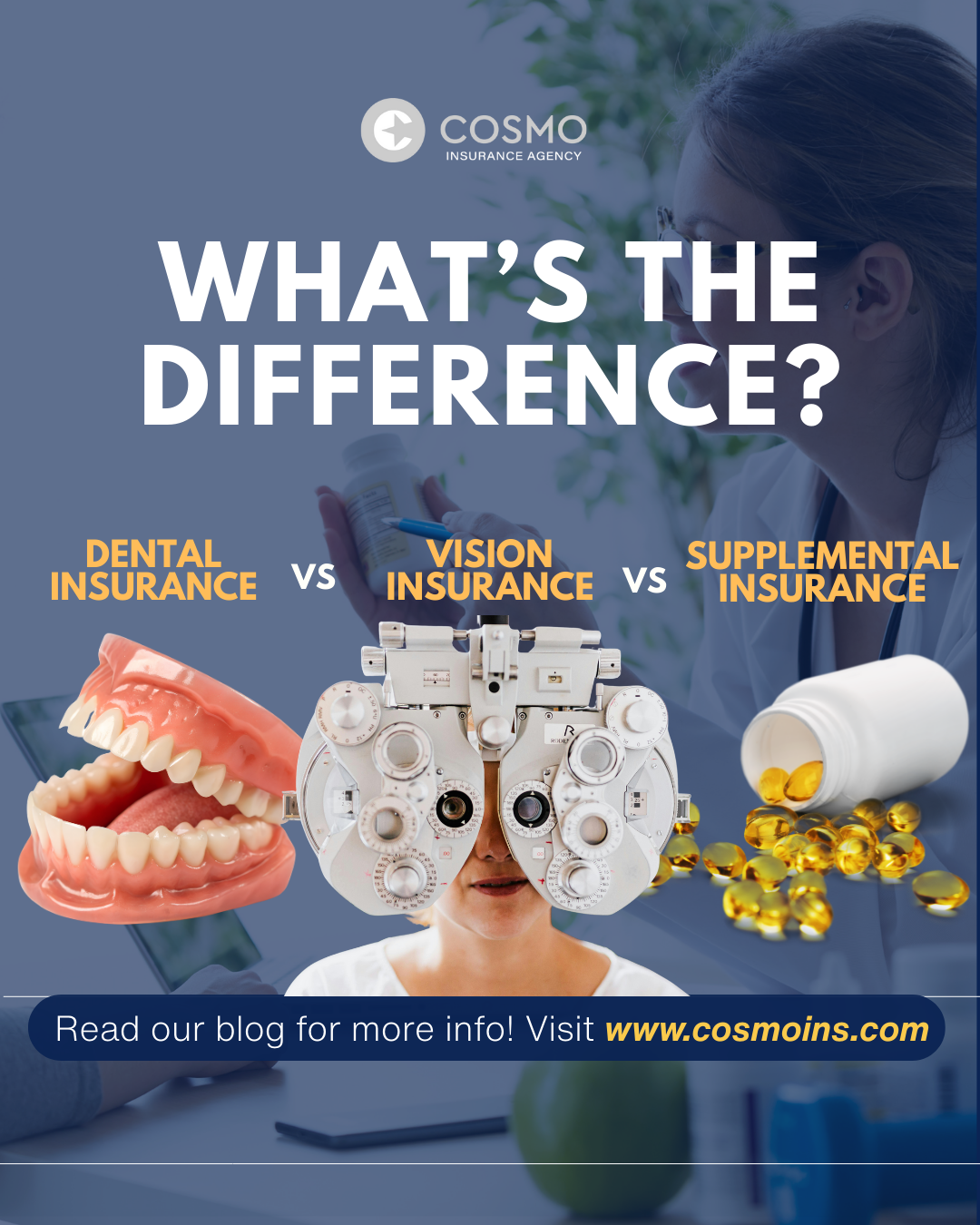
When it comes to insurance coverage, health plans often get most of the attention—but dental, vision, and supplemental plans play a critical role in protecting both your health and your wallet. Many people assume these plans are interchangeable or optional, yet each one serves a very different purpose.
If you’ve ever wondered which coverage you actually need (and why), here’s a simple breakdown to help you make informed decisions.
Dental Insurance: More Than Just Cleanings
Dental insurance focuses on oral health, which is closely linked to overall wellness. Regular dental care can help prevent serious conditions like gum disease, infections, and even heart-related complications.
What dental plans typically cover:
- Preventive care (cleanings, exams, X-rays)
- Basic procedures (fillings, extractions)
- Major services (crowns, root canals, oral surgery)
- Orthodontics (often limited or optional)
Why it matters:
Dental issues can escalate quickly—and treatment without insurance can be expensive. Dental plans encourage preventive care, helping you catch problems early and avoid higher costs later.
Vision Insurance: Keeping Your Eyes (and Budget) Healthy
Vision insurance is designed to support eye health and maintain clear vision. While many medical plans only cover eye care related to disease or injury, vision plans focus on routine eye care.
What vision plans usually include:
- Eye exams
- Prescription glasses or contact lenses
- Discounts on frames, lenses, and corrective options
- Early detection of eye conditions like glaucoma or macular degeneration
Why it matters:
Vision changes can happen gradually, and regular eye exams are key to detecting health concerns early—not just vision issues, but sometimes signs of diabetes or high blood pressure too.
Supplemental Insurance: Extra Protection When You Need It Most
Supplemental plans are not replacements for health insurance—they’re designed to fill coverage gaps and help manage out-of-pocket costs.
Common types of supplemental plans include:
- Accident insurance
- Critical illness coverage
- Hospital indemnity plans
- Disability income insurance
What makes them different:
These plans often pay cash benefits directly to you, which can be used for deductibles, copays, lost income, or everyday expenses while recovering.
Why they matter:
Even with good health insurance, unexpected events can lead to financial stress. Supplemental plans provide added peace of mind when life doesn’t go as planned.
Key Differences at a Glance
| Plan Type | Primary Focus | Helps With |
| Dental | Oral health | Preventive and restorative dental care |
| Vision | Eye care | Exams, glasses, contacts |
| Supplemental | Financial protection | Out-of-pocket and unexpected expenses |
Do You Need All Three?
That depends on your lifestyle, health needs, and financial goals. Many individuals and families choose to combine dental, vision, and supplemental coverage to create a more complete protection strategy—especially since these plans are often affordable and customizable.
For employers, offering these benefits can also boost employee satisfaction, retention, and overall well-being.
Final Thoughts
Dental, vision, and supplemental plans may seem similar at first glance, but they each serve a unique and important role. Understanding the differences helps you avoid coverage gaps, control costs, and protect what matters most—your health and financial security.
👉 Not sure which plans are right for you or your team? Let us help you review your options and build coverage that truly fits your needs.
For more follow us on Instagram, Facebook, Twitter, & LinkedIn.
