
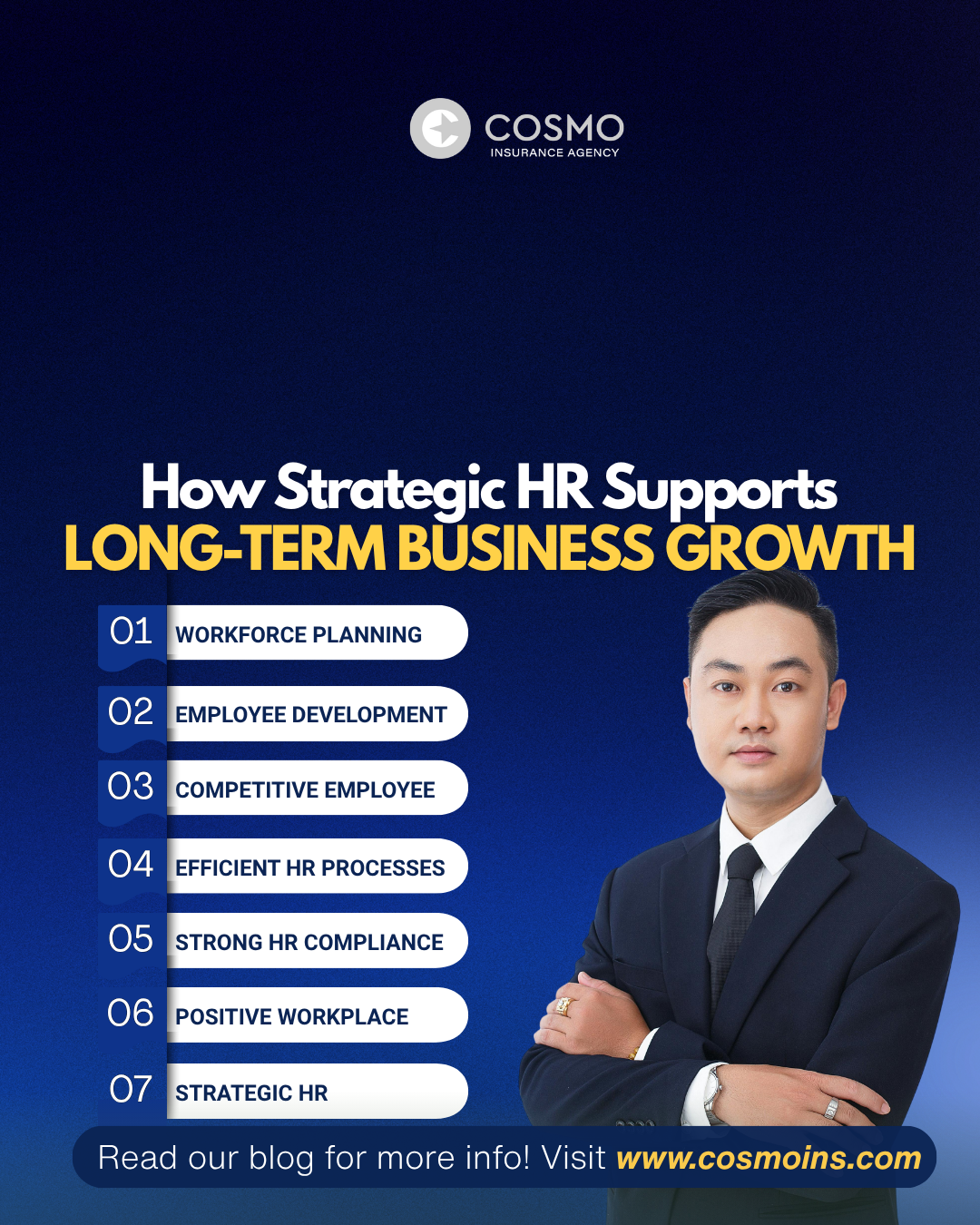
In today’s evolving business environment, long-term success requires more than strong sales, innovative products, or effective operations. Businesses also need a workforce that is engaged, supported, and aligned with organizational goals. This is where strategic Human Resources (HR) plays a vital role.
Rather than focusing solely on administrative tasks, strategic HR helps businesses plan for the future, develop talent, improve employee experiences, and build a workplace that supports sustainable growth.
For companies looking to expand, improve productivity, and remain competitive, investing in strategic HR can make a meaningful difference.
What Is Strategic HR?
Strategic HR involves aligning human resource practices with a company’s long-term business objectives. It connects workforce planning, employee development, benefits, compliance, and organizational culture to the broader direction of the business.
Traditional HR often focuses on immediate employee needs and administrative responsibilities. Strategic HR takes a forward-looking approach by asking:
- Do we have the right people to support future growth?
- Are employees equipped with the skills needed for evolving business demands?
- Are our benefits and compensation programs competitive?
- Are our HR processes efficient enough to support expansion?
- How can we improve employee retention and engagement?
By addressing these questions, businesses can make more informed workforce decisions and prepare for future opportunities.
1. Workforce Planning Helps Businesses Prepare for Growth
Business growth often brings new challenges, including increased workloads, additional positions, and changing operational needs.
Strategic HR helps organizations anticipate these changes through workforce planning. By evaluating current staffing levels, identifying skill gaps, and forecasting future hiring needs, HR can help businesses prepare before challenges affect productivity.
Effective workforce planning can help businesses:
- Identify critical positions and future talent needs.
- Reduce unnecessary hiring expenses.
- Prepare employees for expanded responsibilities.
- Support smoother transitions during organizational changes.
- Build a workforce that aligns with long-term business goals.
With the right people in the right roles, companies can pursue growth while maintaining operational stability.
2. Employee Development Builds a Stronger Workforce
Employees are one of a company’s most valuable resources. Investing in their professional development can strengthen performance while preparing the organization for future demands.
Strategic HR supports employee growth through training, mentorship, leadership development, and career advancement opportunities.
When employees understand how they can grow within an organization, they may feel more motivated to contribute to its success.
Businesses can support development by:
- Offering ongoing skills training.
- Establishing leadership development programs.
- Creating clear career progression opportunities.
- Encouraging knowledge sharing across departments.
- Identifying employees who may be ready for future leadership roles.
Developing internal talent can also help reduce reliance on external recruitment for every new leadership or specialized position.
3. Competitive Employee Benefits Support Retention
Attracting talent is only one part of building a successful workforce. Retaining experienced employees is equally important.
A well-designed employee benefits strategy can help businesses strengthen employee satisfaction, support financial and personal well-being, and remain competitive in the labor market.
Beyond health insurance, companies may consider:
- Dental and vision coverage.
- Disability and life insurance.
- Employee Assistance Programs (EAPs).
- Health Savings Accounts (HSAs) and Flexible Spending Accounts (FSAs).
- Wellness initiatives.
- Voluntary benefits and supplemental coverage.
Strategic HR evaluates employee needs alongside business budgets to create benefits packages that support both the workforce and the organization.
With guidance from an experienced benefits consultant, employers can explore cost-effective options without overlooking the value of employee support.
4. Efficient HR Processes Allow Businesses to Scale
As a business grows, managing employee records, benefits enrollment, payroll coordination, onboarding, and compliance can become increasingly complex.
Without organized systems, administrative responsibilities can take time away from strategic priorities.
HR technology and Human Resources Information Systems (HRIS) help streamline essential processes and improve access to workforce information.
An effective HRIS can support:
- Employee onboarding and offboarding.
- Benefits enrollment and employee updates.
- Centralized employee records.
- Payroll and HR coordination.
- Reporting and workforce insights.
- Improved communication between employees and HR teams.
By simplifying routine administrative work, businesses can give their HR teams more time to focus on employee development, workforce planning, and organizational improvement.
5. Strong HR Compliance Protects Business Continuity
Long-term growth also requires businesses to manage employment-related responsibilities carefully.
As organizations expand, they may face additional requirements involving employee classification, benefits administration, workplace policies, documentation, and applicable employment laws.
Strategic HR helps businesses establish consistent processes and identify areas that may require attention.
A proactive HR compliance approach includes:
- Reviewing employee policies and procedures.
- Maintaining accurate employment documentation.
- Monitoring relevant regulatory changes.
- Supporting consistent workplace practices.
- Providing guidance on employee-related concerns.
Having reliable HR support can help businesses address potential issues early and maintain more organized operations as they grow.
6. A Positive Workplace Culture Encourages Sustainable Performance
Growth is not just about increasing revenue or expanding operations. It also involves creating an environment where employees can perform, collaborate, and contribute effectively.
Strategic HR helps shape workplace culture by encouraging communication, recognizing employee contributions, supporting leadership development, and promoting employee well-being.
A positive work environment can contribute to:
- Higher employee engagement.
- Stronger collaboration.
- Improved employee morale.
- Better communication between teams.
- Greater organizational stability.
When employees feel supported and understand how their work contributes to business goals, organizations can build stronger connections between individual performance and long-term success.
7. Strategic HR Turns Workforce Insights Into Better Decisions
HR data can provide valuable information about employee turnover, hiring trends, benefits participation, absenteeism, and workforce development.
When businesses use these insights effectively, they can identify patterns, evaluate existing strategies, and make informed adjustments.
For example, reviewing turnover trends may help employers identify retention challenges, while analyzing benefits participation may reveal opportunities to improve employee communication or plan design.
Strategic HR uses these insights to support decisions that balance employee needs with business objectives.
How Cosmo Insurance Agency Supports Your Business Growth
Building a successful business requires more than managing day-to-day HR responsibilities. It takes thoughtful planning, reliable employee benefits, and systems that can grow alongside your organization.
At Cosmo Insurance Agency, we help businesses simplify workforce management through employee benefits, insurance solutions, and HR support.
Our services include:
- Employee Benefits: Health, dental, vision, life, and disability coverage designed around your workforce.
- PEO Services: Support for businesses seeking assistance with payroll, HR administration, and employee management.
- HRIS Support: Streamlined benefits enrollment, employee updates, and HR processes.
- HR Compliance: Guidance to help employers navigate changing workplace requirements.
- EAP & Wellness Programs: Resources that support employee well-being and workplace engagement.
- Cost-Effective Benefits Solutions: Options that help employers balance employee needs and business budgets.
With a dedicated team supporting your organization, you can spend less time navigating complex HR responsibilities and more time focusing on your business goals.
Final Thoughts
Strategic HR is an investment in the future of your business. By connecting workforce planning, employee development, benefits, technology, and compliance to long-term objectives, organizations can build a foundation for sustainable growth.
Whether your business is preparing to expand, improve retention, or modernize its HR operations, the right HR strategy can help you move forward with greater clarity and confidence.
Ready to align your HR strategy with your business goals?
Contact Cosmo Insurance Agency today to explore employee benefits, payroll, and HR solutions designed to support your business at every stage of growth.
Cosmo Insurance Agency — Your Partner in Employee Benefits and HR Solutions.
For more follow us on Instagram, Facebook, Twitter, & LinkedIn.
