
Employee feedback should not be limited to annual performance reviews. In today’s workplace, employees benefit from having regular opportunities to share their experiences, discuss challenges, recognize successes, and communicate what they need to do their best work.
For employers, continuous employee feedback provides valuable insight into what is happening across the organization. When feedback becomes an ongoing part of workplace culture, businesses can identify concerns earlier, strengthen communication, and create a more engaged workforce.
What Is Continuous Employee Feedback?
Continuous employee feedback is the practice of creating regular opportunities for employees and managers to exchange constructive feedback throughout the year.
Instead of waiting for a scheduled annual review, organizations can use:
- One-on-one conversations
- Employee surveys and pulse checks
- Team meetings
- Performance check-ins
- Anonymous feedback tools
- Recognition programs
- Stay interviews
- Post-project discussions
The goal is not to constantly evaluate employees. It is to create an open communication process where feedback can be shared and addressed before small issues become larger workplace challenges.
Why Regular Feedback Matters
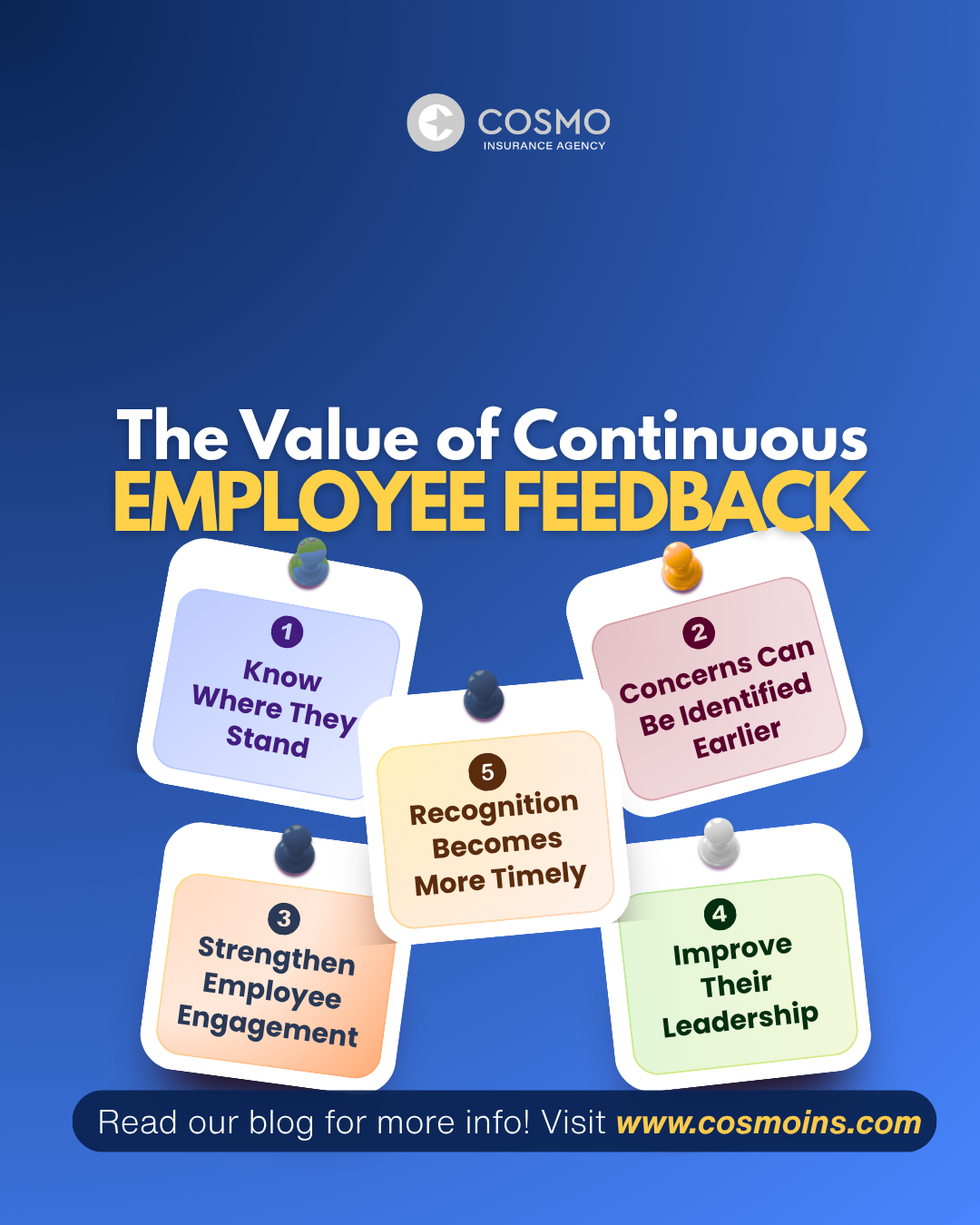
1. Employees Know Where They Stand
Employees should not have to wait months to find out whether they are meeting expectations. Regular conversations can provide clarity around goals, responsibilities, performance, and areas for improvement.
Frequent feedback also gives employees an opportunity to ask questions and make adjustments while there is still time to improve.
2. Concerns Can Be Identified Earlier
Workplace issues can develop gradually. Communication problems, unclear expectations, workload concerns, or dissatisfaction may go unnoticed when employers only gather feedback once or twice a year.
Regular check-ins give employees more opportunities to raise concerns. Managers can then address issues proactively rather than reacting after they have affected morale, productivity, or retention.
3. Feedback Can Strengthen Employee Engagement
Employees are more likely to feel connected to their workplace when they believe their perspectives are heard and taken seriously.
Continuous feedback creates a two-way conversation. Employees can discuss what is working well, while employers gain insight into what may need to change.
Listening alone is not enough, however. Employees also need to see that meaningful feedback can lead to appropriate action.
4. Managers Can Improve Their Leadership
Feedback should not flow only from managers to employees.
Organizations can encourage employees to provide constructive feedback about communication, leadership, processes, and workplace support. This can help managers understand how their decisions and management styles affect their teams.
A culture where leaders are also open to feedback can make workplace communication more collaborative.
5. Recognition Becomes More Timely
Feedback does not always have to focus on what needs improvement.
Regular conversations create opportunities to recognize accomplishments, celebrate progress, and acknowledge employees who contribute to team success.
Timely recognition can be more meaningful than waiting for an annual review to recognize something that happened months earlier.
Building a Culture of Continuous Feedback
Creating a feedback culture requires more than sending an occasional employee survey. Employers should establish consistent processes and make feedback a normal part of workplace communication.
Consider these strategies:
Schedule regular check-ins.
Short, consistent conversations can help managers stay informed about employee goals, challenges, and development.
Ask specific questions.
Questions such as “What is one thing that would make your work easier?” can generate more useful information than a general request for feedback.
Make feedback two-way.
Give employees opportunities to provide feedback about their managers, teams, and workplace experience.
Act on meaningful feedback.
When employees repeatedly raise the same concern, employers should evaluate whether changes are appropriate and communicate what steps will be taken.
Protect psychological safety.
Employees should feel comfortable sharing constructive feedback without fear of retaliation or negative treatment.
Use technology appropriately.
HRIS platforms, employee engagement tools, and survey systems can help organizations collect and organize feedback while making the process easier to manage.
Continuous Feedback Supports a Stronger Employee Experience
Employee feedback is more than an HR activity. It can provide organizations with a better understanding of the employee experience and help leaders make more informed workplace decisions.
When employees have regular opportunities to communicate, employers can better understand what their workforce needs, recognize achievements, address challenges, and support professional development.
For organizations looking to strengthen employee engagement and retention, continuous feedback can be an important part of a broader employee benefits and HR strategy.
How Cosmo Insurance Agency Can Help
Managing employee needs involves more than selecting a benefits plan. Employers also need effective HR processes, employee communication, compliance support, and tools that make workforce administration easier.
At Cosmo Insurance Agency, we help businesses navigate employee benefits, HR solutions, and workforce support. From employee benefits and HRIS support to compliance and wellness programs, our team can help employers build a more organized and supportive employee experience.
Contact Cosmo today to explore employee benefits and HR solutions designed around your organization and your workforce.
For more follow us on Instagram, Facebook, Twitter, & LinkedIn.
