
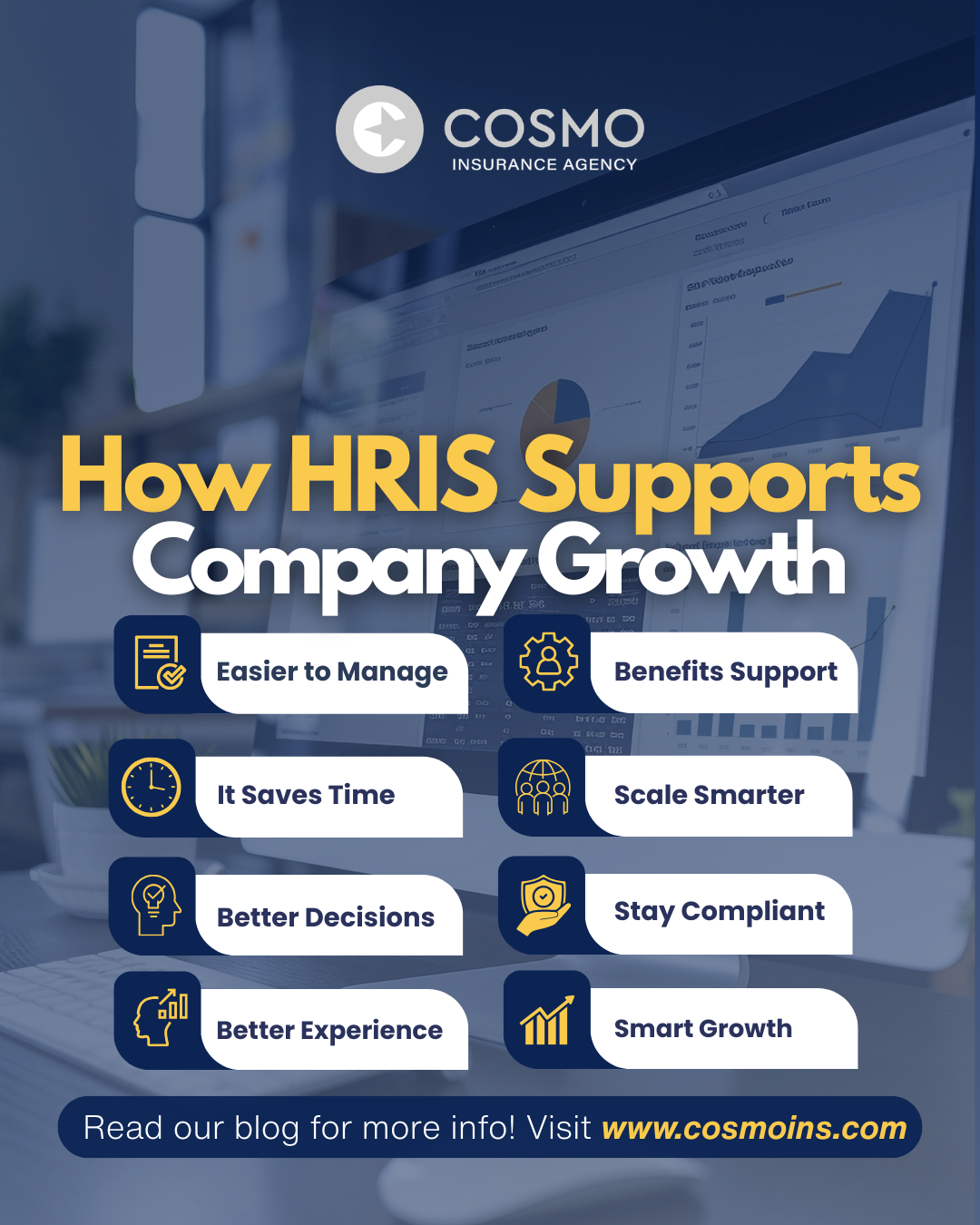
A modern HRIS can help businesses streamline HR operations, improve employee experiences, and build a stronger foundation for long-term growth.
As companies grow, managing employees becomes increasingly complex. More employees mean more data, more administrative tasks, and more opportunities for communication gaps or costly errors.
A Human Resources Information System (HRIS) can help businesses manage that complexity. By centralizing important HR functions and automating routine processes, an HRIS gives HR teams more time to focus on people, strategy, and business growth.
What Is an HRIS?
An HRIS is a technology platform that helps businesses manage employee information and human resources processes in one centralized system.
Depending on the platform, an HRIS may support:
- Employee records and documentation
- Payroll and time tracking
- Benefits administration
- Onboarding and offboarding
- Performance management
- Employee self-service
- Compliance reporting
- HR analytics and reporting
Instead of relying on spreadsheets, paperwork, emails, and disconnected systems, companies can bring essential HR information together in one place.
1. HRIS Makes Growing Teams Easier to Manage
When a company has a small team, HR tasks may be manageable with manual processes. As the workforce expands, however, those processes can become inefficient.
An HRIS helps standardize and automate everyday tasks. Whether you’re onboarding a few employees or an entire department, having consistent processes makes growth easier to manage.
This can reduce administrative work while helping HR teams maintain greater accuracy and organization.
2. It Saves HR Teams Time
HR professionals spend significant time handling repetitive administrative responsibilities. An HRIS can automate many of these tasks, allowing HR teams to redirect their attention toward higher-value initiatives.
Instead of spending hours searching for employee information or managing routine paperwork, HR can focus more on:
- Employee engagement
- Talent development
- Workforce planning
- Retention strategies
- Company culture
- Leadership development
Technology doesn’t replace the human side of HR—it gives HR professionals more time to focus on it.
3. Better Data Helps Leaders Make Better Decisions
Growth requires informed decision-making. Companies need to understand their workforce to plan effectively.
An HRIS can provide valuable insights into areas such as headcount, turnover, compensation, benefits, attendance, and workforce trends.
With better access to HR data, leadership can make more informed decisions about hiring, budgeting, benefits, and workforce planning.
4. HRIS Improves the Employee Experience
Growth isn’t only about adding employees. It’s also about creating an environment where employees can succeed.
Many HRIS platforms provide employee self-service features that allow employees to access information, update personal details, review benefits, request time off, and complete HR-related tasks without relying on HR for every request.
A smoother employee experience can improve efficiency while helping employees feel more empowered and supported.
5. It Supports Benefits Administration
Employee benefits become increasingly complex as organizations grow. Managing eligibility, enrollment, employee information, and communications manually can create unnecessary administrative challenges.
An HRIS can help centralize benefits-related information and streamline processes, making it easier for HR teams and employees to manage benefits.
For employers, this can also support better organization and communication around the benefits package.
6. HRIS Helps Companies Scale
One of the biggest advantages of an HRIS is scalability.
The HR processes that work for a 20-person company may not work for a 200-person organization. As employee numbers increase, businesses need systems that can grow alongside them.
A scalable HRIS can provide a consistent infrastructure for HR operations as the organization expands into new teams, locations, or markets.
7. It Helps Strengthen Compliance and Accuracy
HR departments manage sensitive employee information and must navigate numerous workplace requirements.
Centralizing employee data and standardizing processes can help reduce errors and improve recordkeeping. Many HRIS platforms also provide reporting and tracking capabilities that can assist HR teams with compliance-related responsibilities.
While technology doesn’t eliminate compliance risk, having organized and accessible information can make HR administration more manageable.
8. HRIS Frees HR to Focus on Strategic Growth
Perhaps the greatest benefit of an HRIS is the ability to move HR beyond administration.
When routine processes become more efficient, HR professionals can spend more time helping the organization achieve its broader goals.
That may include developing talent, improving retention, strengthening employee benefits, building leadership pipelines, and planning for future workforce needs.
The Bottom Line
Company growth requires more than hiring additional employees. Businesses need the right systems and processes to support those employees as the organization evolves.
An HRIS can provide that foundation by streamlining HR operations, improving access to information, supporting employee experiences, and giving leaders better workforce insights.
The right HR technology can help your HR team spend less time managing paperwork and more time helping your organization grow.
At Cosmo Insurance, we understand that employee benefits and HR strategy are important parts of building a competitive workplace. If your organization is growing, having the right benefits strategy and HR infrastructure can help you support your workforce at every stage.
For more follow us on Instagram, Facebook, Twitter, & LinkedIn.
